Mobile iOS
Axiom H2
Hydrogen therapy companion app
Biohacking companion app for the Axiom H2 Hydrogen therapy machine.
UX Research · UX Design
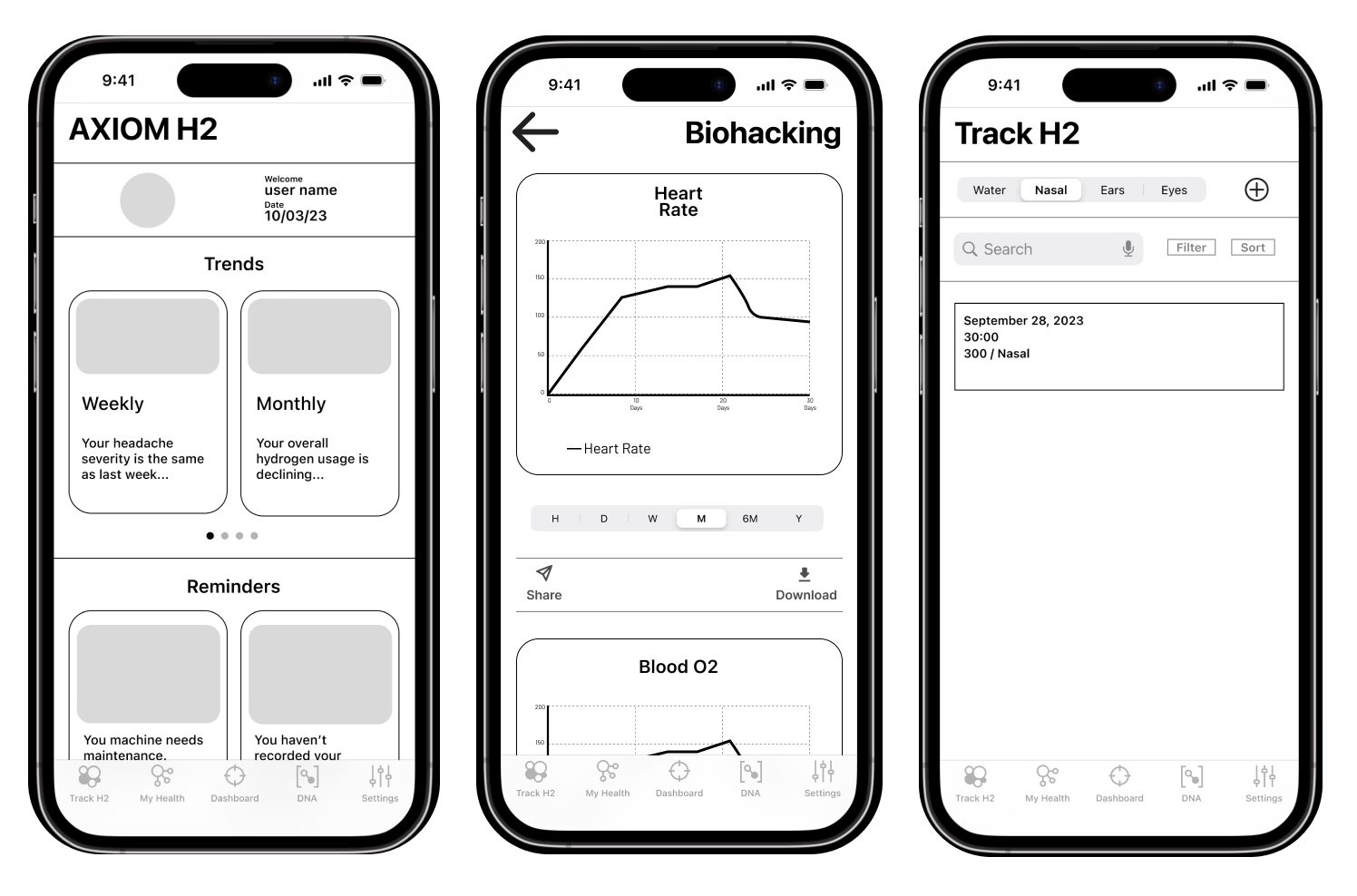
Users need to monitor their health metrics and track effectiveness during hydrogen therapy sessions, but have no way to correlate their therapy usage with health outcomes.
Designing a companion iOS app for the Axiom H2 hydrogen therapy machine, prioritizing features through user research and iterative design.
- •User Needs Identification
- •Lack of Connectivity (non-connected device)
- •Market Competition
The Machine
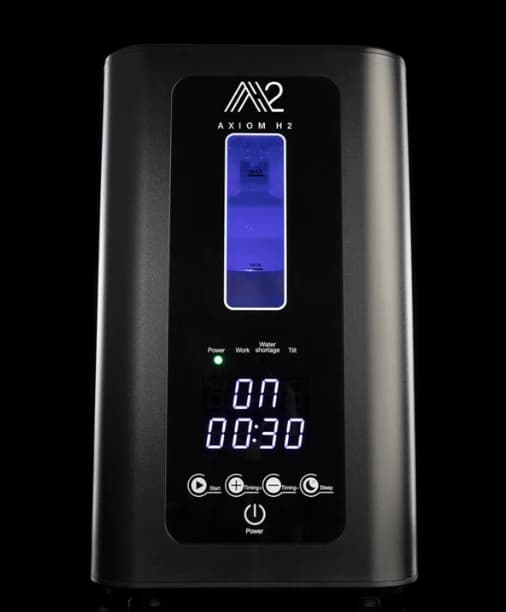
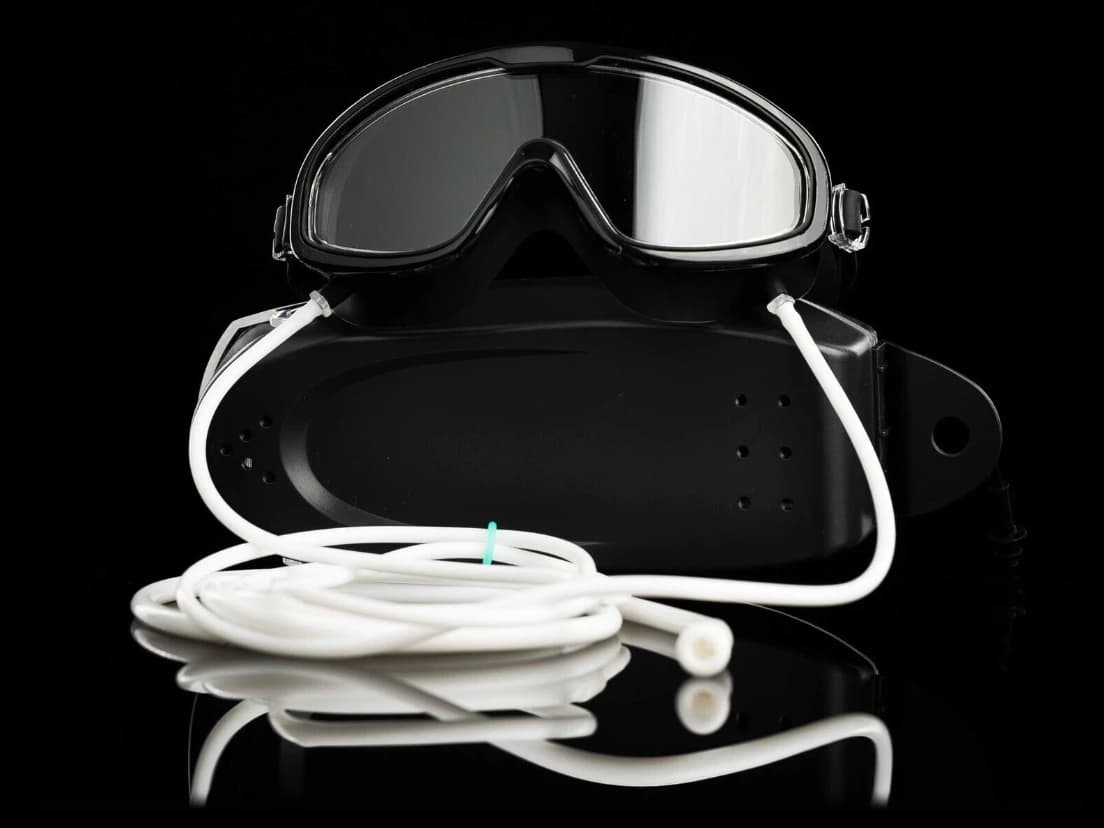
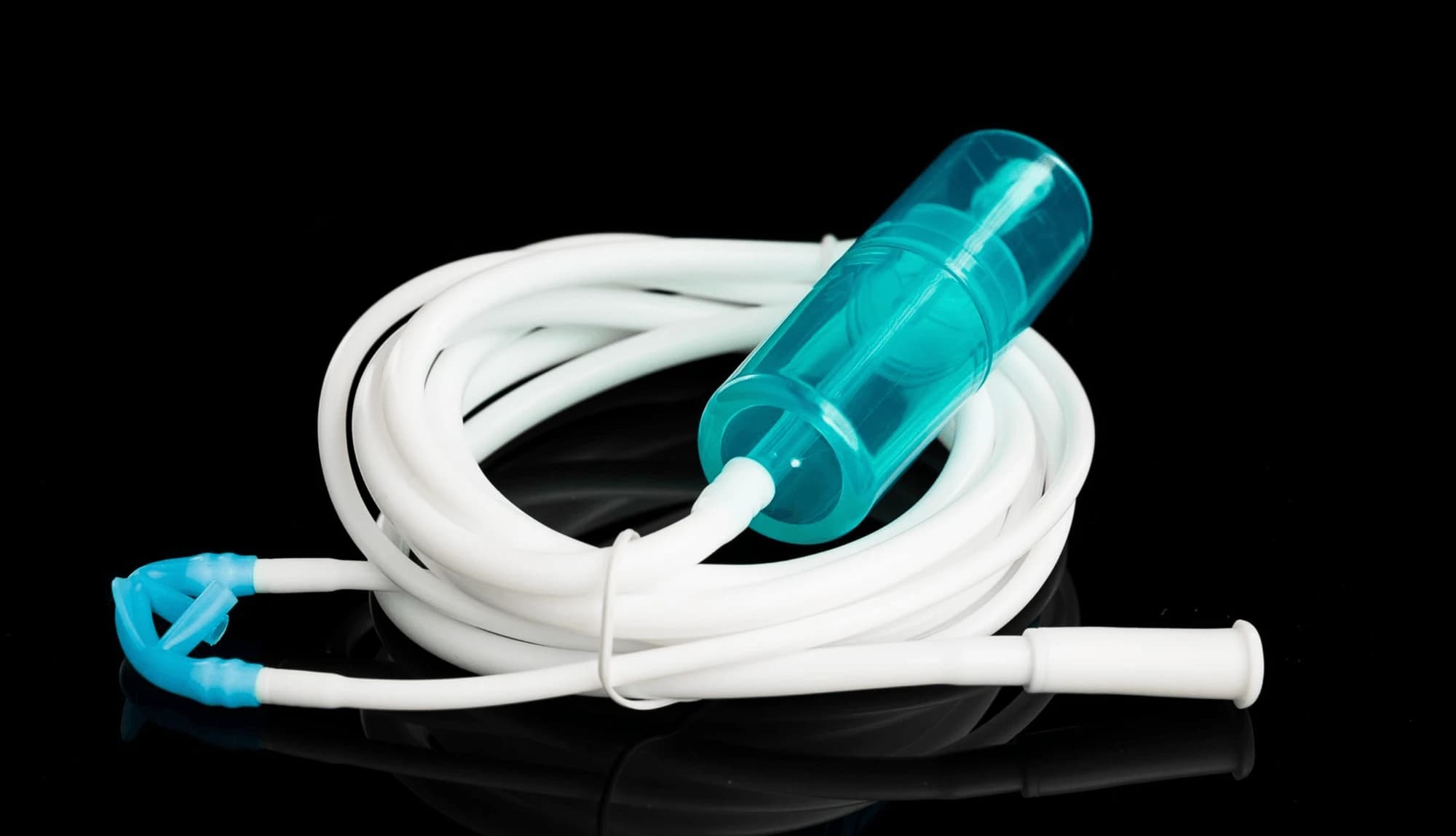
The Axiom H2 is a hydrogen therapy machine that produces molecular hydrogen for therapeutic use. Users can:
- •Inhale hydrogen through the nose via cannula
- •Apply hydrogen to eyes and ears
- •Create hydrogen-infused water for drinking
The device operates independently without any connectivity features—a key constraint for app design.

Competition Analysis
How do we measure hydrogen therapy effectiveness on a dumb machine?
Competitors in the hydrogen therapy space offer similar machines with comparable functionality. The key differences lie primarily in marketing approaches and brand positioning rather than core technology.
No existing apps specifically designed for hydrogen therapy tracking. All machines in this space are “dumb” devices with no connectivity or digital companion features.
Domain & Science
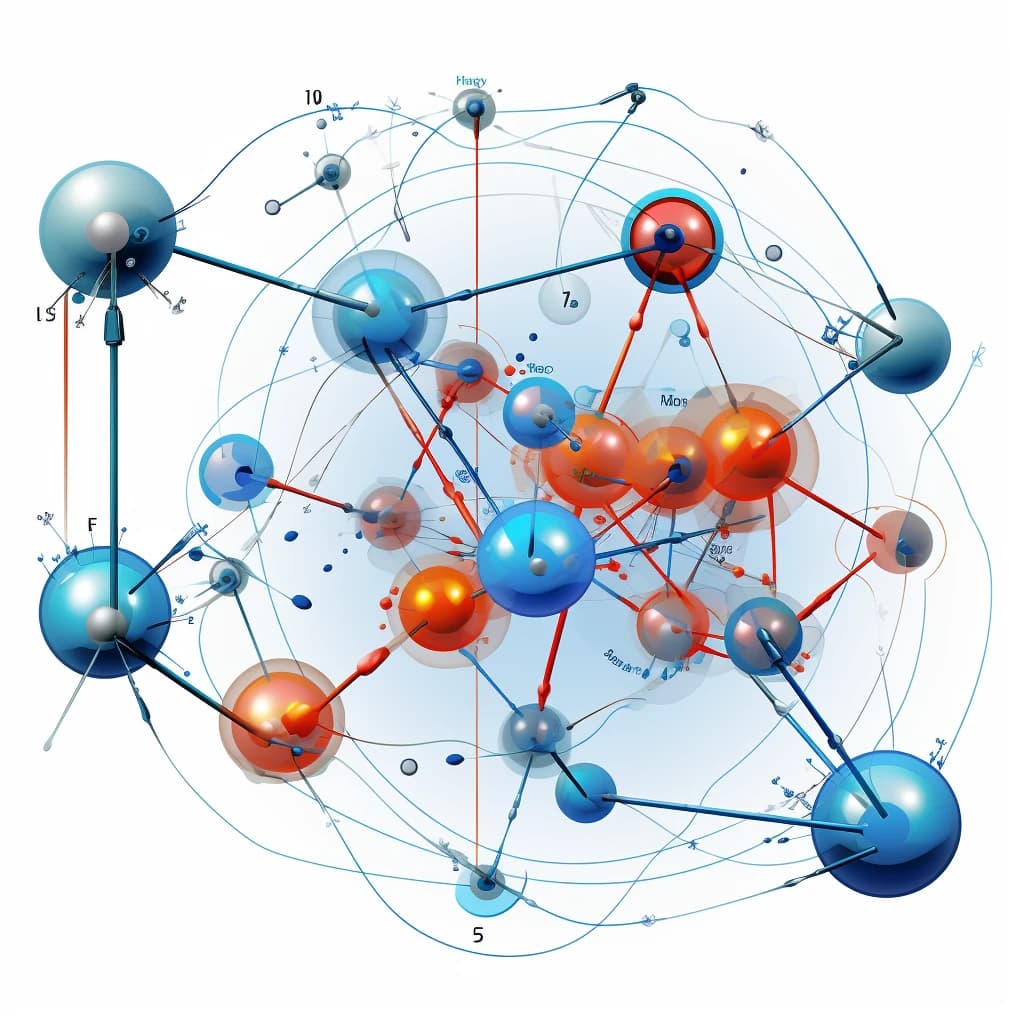
Molecular hydrogen (H₂) has been studied for various therapeutic benefits:
Antioxidant Activity
Selective reduction of harmful free radicals
Anti-Inflammatory
Reduces inflammatory markers
Effects Gene Expression
Modulates cellular signaling
Immune Modulation
Supports immune system balance
Safe / Not New
Decades of research and safe usage
“How do we measure effectiveness? That depends on the user.”
User Research
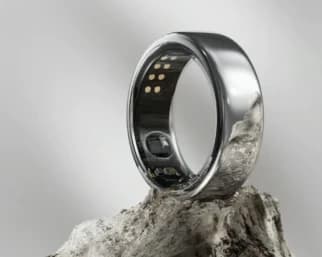
Seeking hard data to optimize performance. Already using wearables, tracking respiratory rates, HRV, and recovery metrics. Want to correlate H₂ therapy with measurable outcomes.
Often exhausted by the medical system. Rely on self-reported metrics and symptom tracking. Looking for alternative therapies and ways to document their health journey.
Interested in monitoring “cellular age” through epigenetic testing. Proactive about longevity and wellness. Want to track long-term trends and biological markers.



Qualitative Research
Interviewed 5 actual Axiom H2 users to understand their therapy habits, health goals, and pain points with tracking their progress.
- 1
Mostly used for autoimmune disease healing (lupus, chronic fatigue)
- 2
Strong interest in epigenetic testing integration
- 3
Machine is one element of overall health improvement routine


Synthesis
After studying the research, it became clear that the initial problem framing needed to change. Users weren't just looking to track hydrogen therapy—they needed a way to understand their overall health journey and see how hydrogen therapy fits into it.
Strategic Pivot
From “hydrogen therapy tracker” to “health correlation dashboard”
The app should help users connect the dots between their symptoms, therapy usage, and health outcomes over time.
New Problem, New Direction
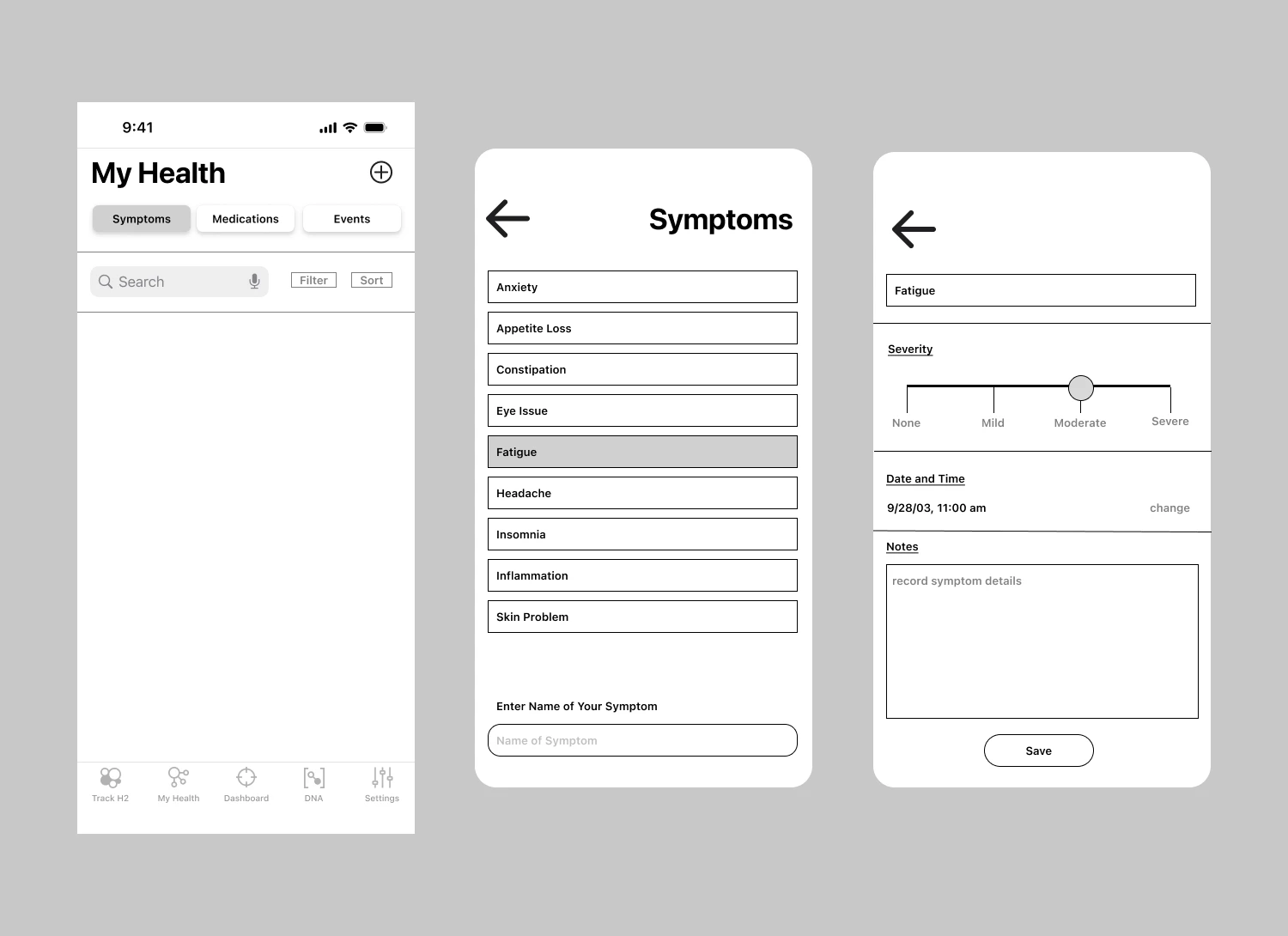
Symptoms Tracking
- •
Gathered common symptoms from research: anxiety, fatigue, constipation, brain fog, joint pain
- •
Custom symptom naming and tracking for personalized monitoring
- •
Severity rating UI for quantifying subjective experiences
- •
Data logging to dashboard for trend visualization
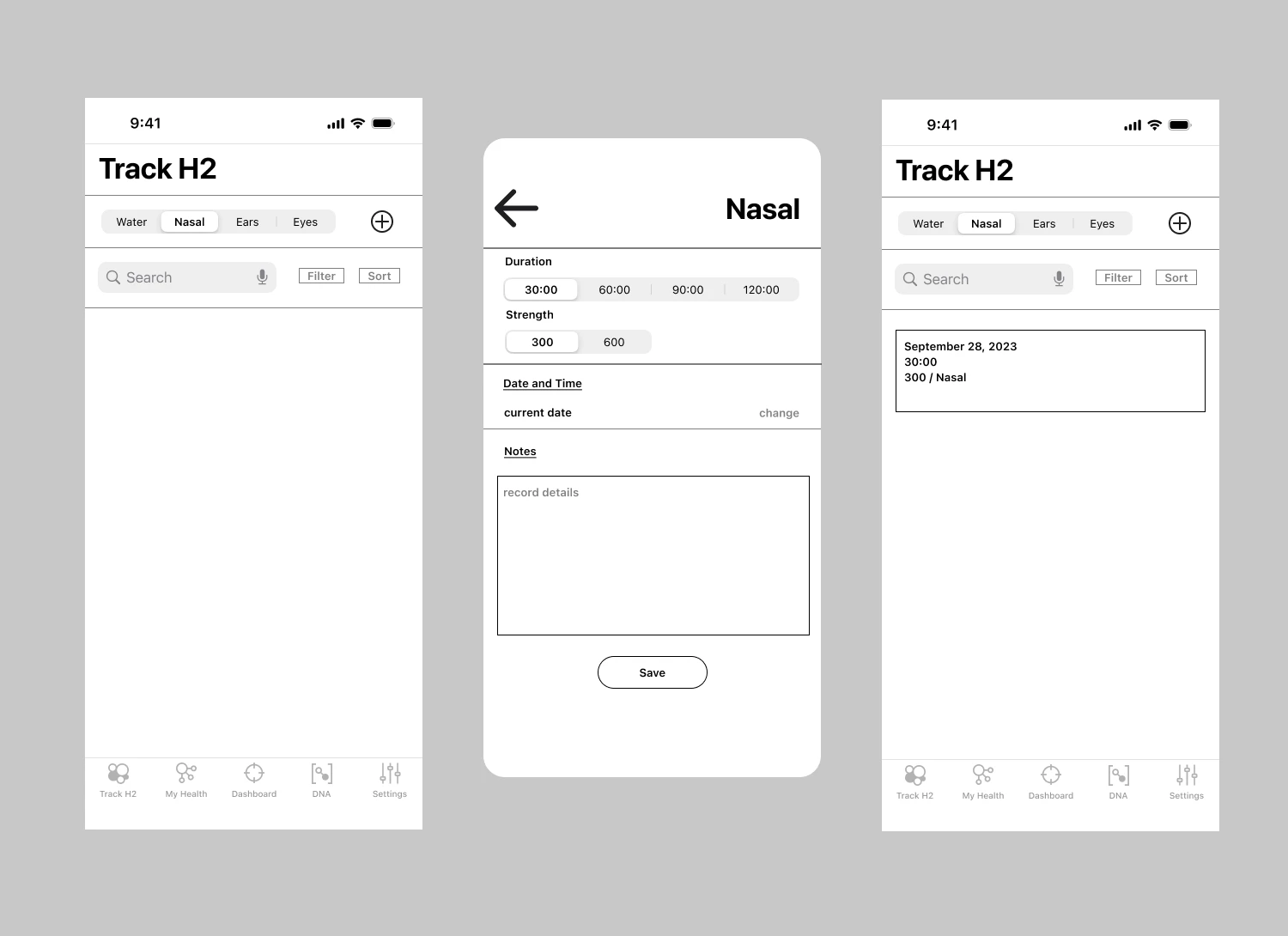
Hydrogen Usage Tracking
Choose between inhalation, eye/ear application, or hydrogen water consumption
Predetermined session lengths (15, 30, 60 min) for consistent tracking
All sessions automatically logged and synced to the dashboard
Data Visualization
- •
Centralized dashboard where all logged data visualizes in meaningful charts
- •
Filter by H₂ delivery methods (inhalation, water, topical)
- •
Adjustable timeframes (week, month, quarter, year)
- •
Downloadable & shareable data for healthcare providers
Main Dashboard
Factoids showing data movement direction—are symptoms improving? Is usage consistent?
Filter change alerts, logging prompts, and OS-level notifications to maintain consistency
See relationships between medications, symptoms, and therapy usage over time

Summary
“This project taught me how research can fundamentally redefine a problem. What began as a simple therapy tracker transformed when user interviews revealed a much broader need—understanding their entire health journey and where hydrogen therapy fits within it.”
Redefining the Problem
Initial assumptions pointed to a simple hydrogen therapy tracker—log sessions, visualize usage. But user interviews revealed something deeper. Users weren't just tracking H₂ therapy; they needed to understand correlations across their entire health picture. This insight shifted the core problem from “How do I track my therapy?” to “How does this therapy fit into my health journey?”
Expanding the Scope
Research revealed that the machine was “one element” of larger wellness routines—users were also managing chronic conditions, tracking symptoms, and exploring epigenetic testing. This expanded the project scope from a simple tracker to a health correlation dashboard that could visualize relationships between therapy usage, symptoms, and outcomes over time. Prototype testing validated that this research-driven direction resonated with users.