AI Product Design
BlockVantage
From a website URL to a live streaming-TV campaign, with the AI doing the setup
A 0→1 product on Blockboard's engine, inventory and design system for an advertiser who has never bought media. A streaming-TV campaign is too much to set up by hand. BlockVantage earns a first-time advertiser's trust by recommending, showing why, and staying open to change.
AI Product Design · Interaction Design · AI UX
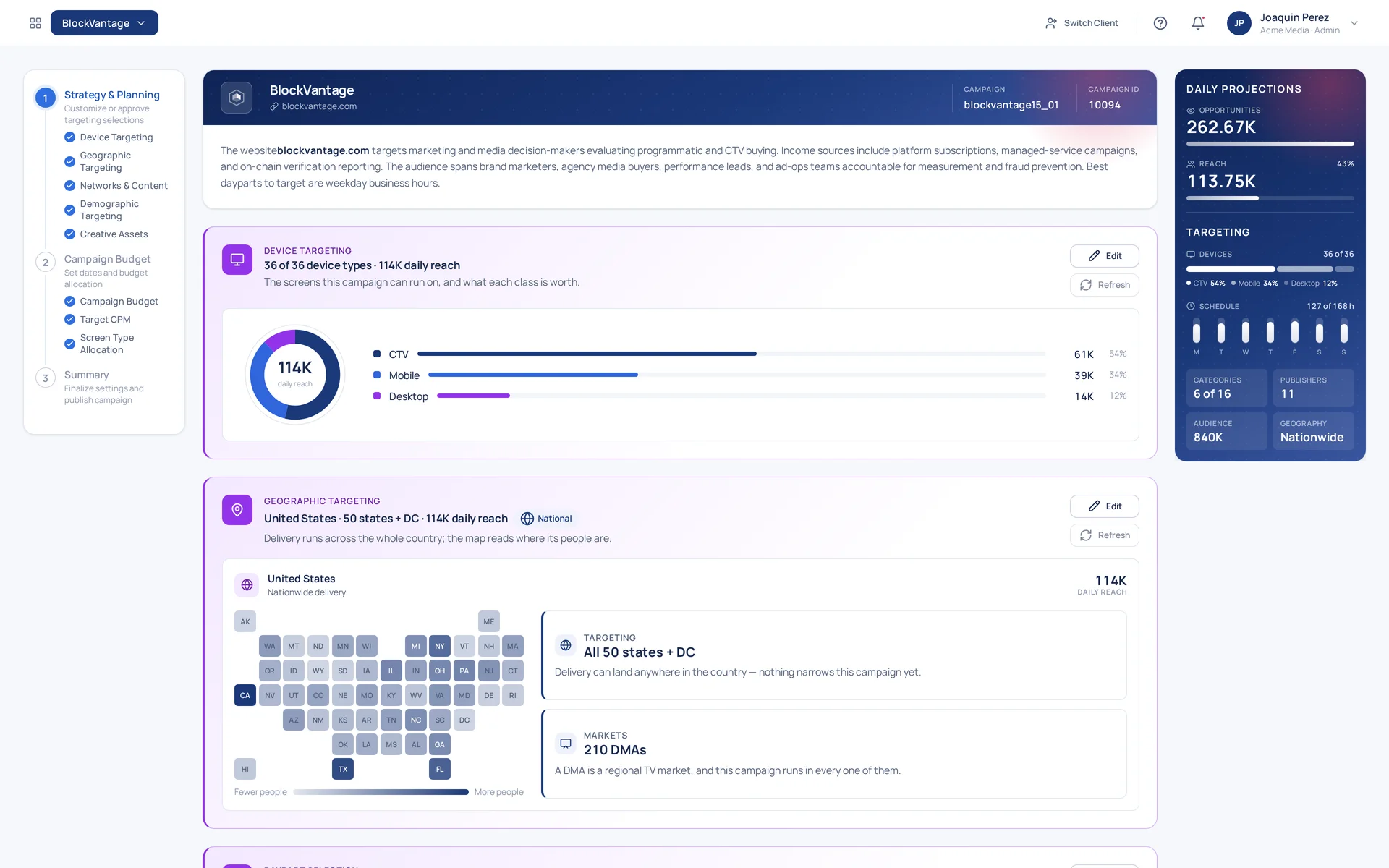
A streaming-TV campaign has more decisions in it than a first-time advertiser expects: which audiences to build, which publishers and content to run against, which devices, which hours of which days, which parts of the country, and how to split the budget across all of it. On the platform media buyers use, each of those is its own screen.
Too much to understand, let alone to configure.
A new product designed from zero on Blockboard, the platform those buyers use: same engine, same inventory, same design system, with a front door for someone who has never bought media.
- •The on-ramp: a website and a budget open a campaign
- •The wizard: the AI reads the site and sets up devices, geography, dayparts, content and audiences, each pick counted and correctable
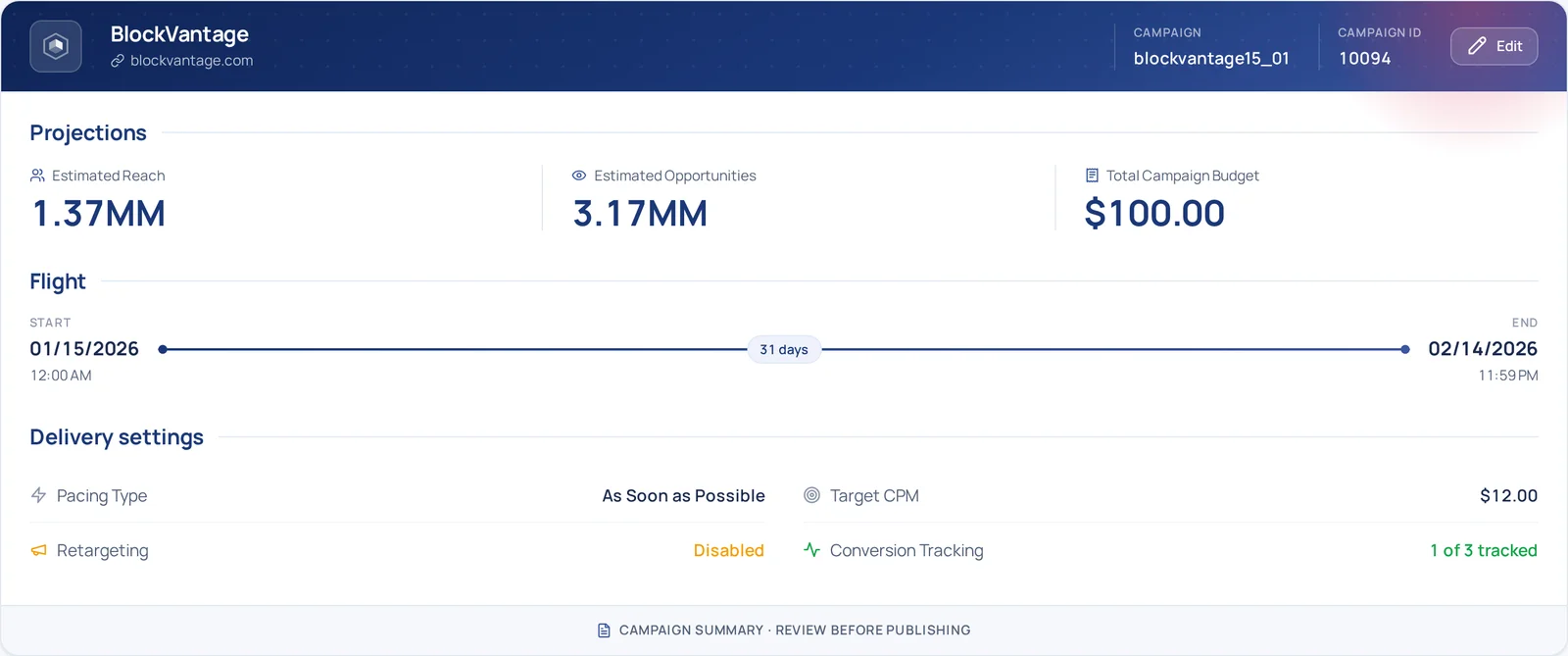
- •The summary: a read-only page, so what gets published is what was reviewed
- •After publishing: the Performance board and the scheduled reports that show what the recommendations did
A first-time advertiser cannot check the AI's work, so the product has to earn their trust without asking for it.
How does a product earn trust it cannot ask for?
Industry background
The advertising intelligence gap.
Blockboard is a programmatic media platform — AI-powered, blockchain-backed, built around trust-verified ad delivery. The company serves mid-market agencies and brands running campaigns across streaming TV and digital channels.
BlockVantage is a product inside that ecosystem. It takes the data intelligence that powers Blockboard's ad buying and packages it as a self-service tool.

Parent brand

The product
The on-ramp
Start from a URL
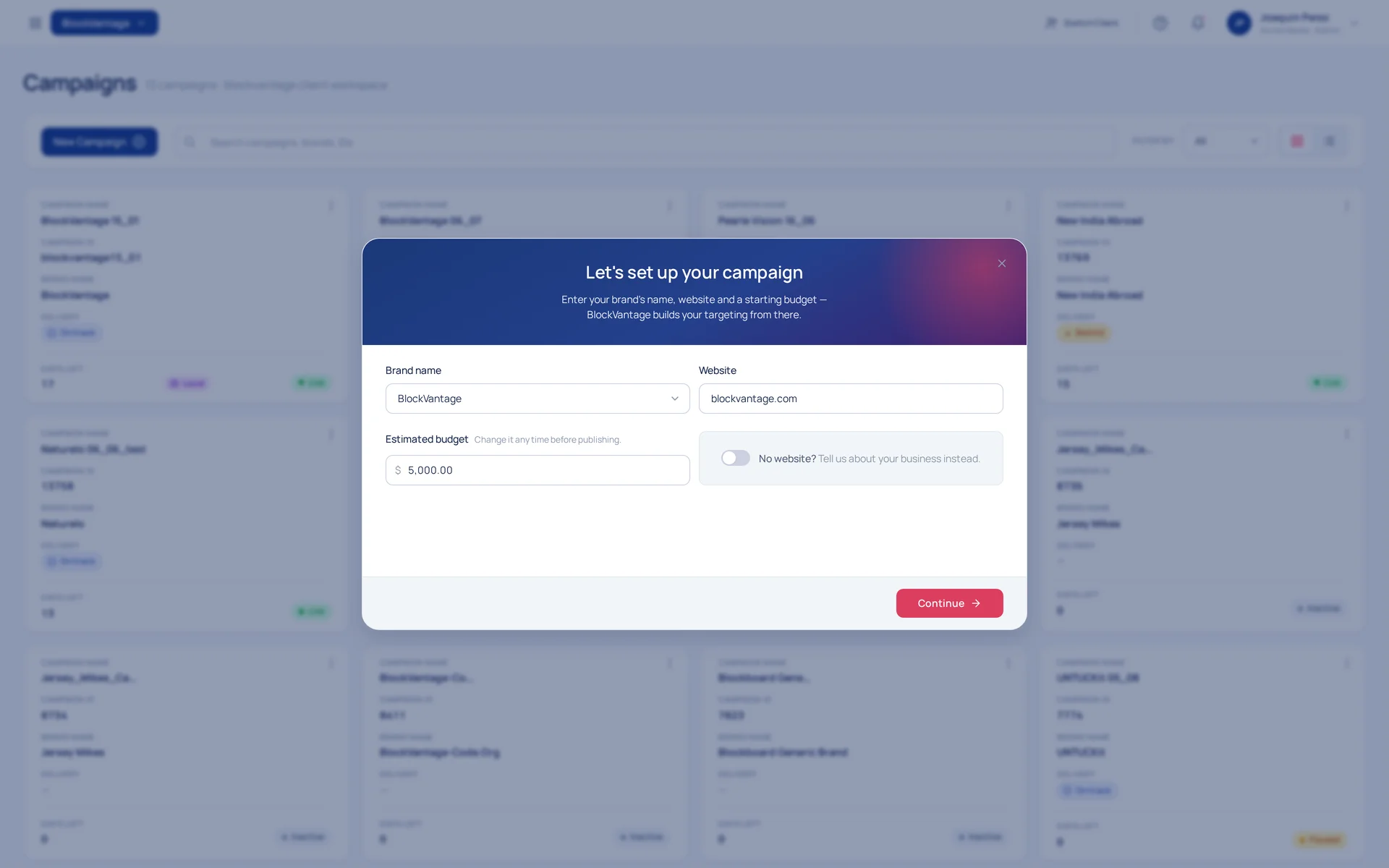
A new campaign asks for three things: the brand's name, its website, and a starting budget. That is the whole form. Everything else is inferred, and everything inferred is shown.
A business with no website flips one switch and answers three questions instead. A business that people visit can add its locations from Google's listings. In every case the button at the end says what it does: Generate campaign.
The AI writes the brief
The wizard opens on a paragraph the advertiser didn't write: what the site is, who it reaches, how it makes money, and which dayparts suit it, read from the brand's own URL. It is the first thing the product asks the advertiser to trust.

Step 1 · Strategy & Planning
Approve or correct, one card at a time
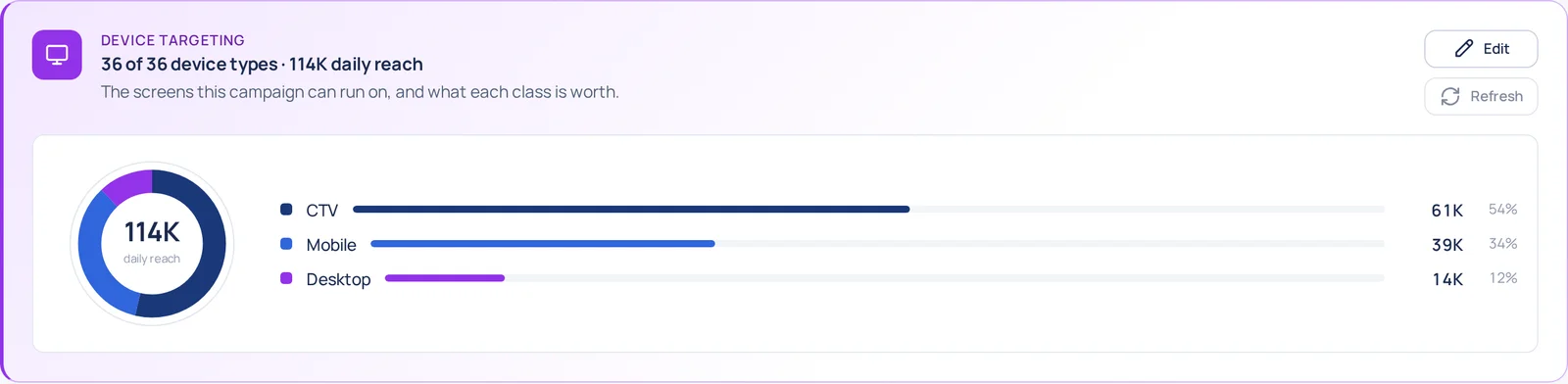
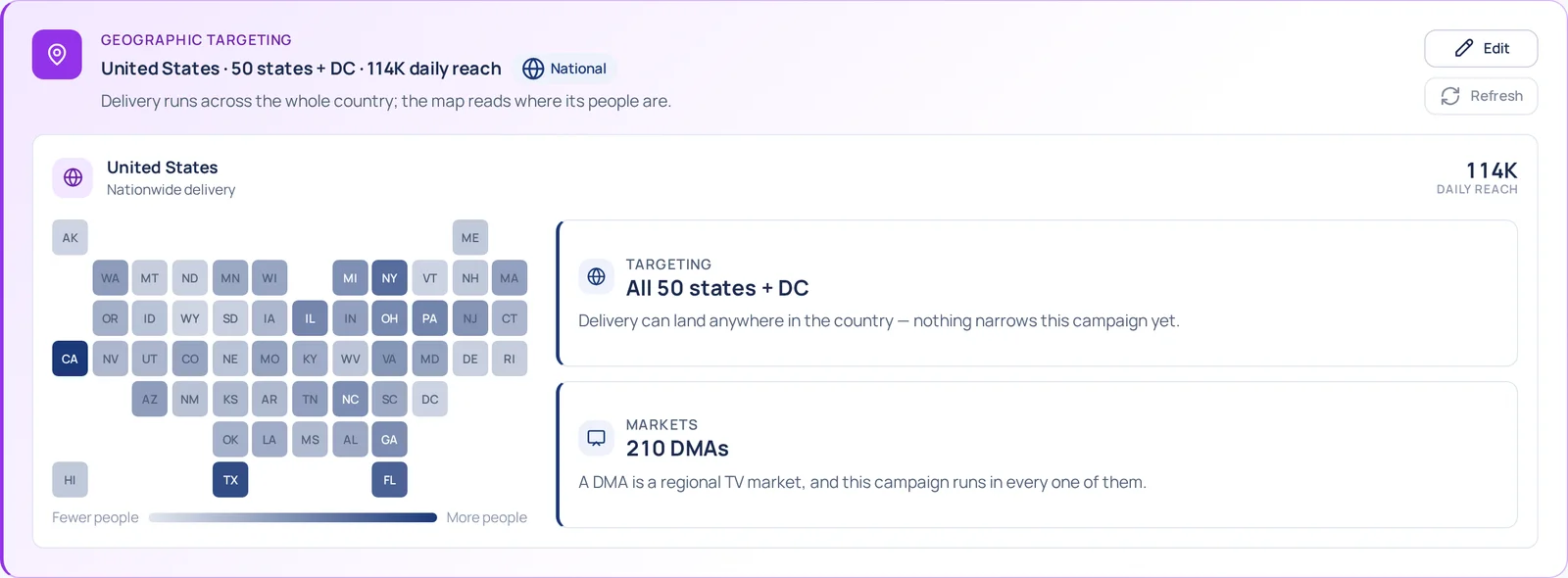
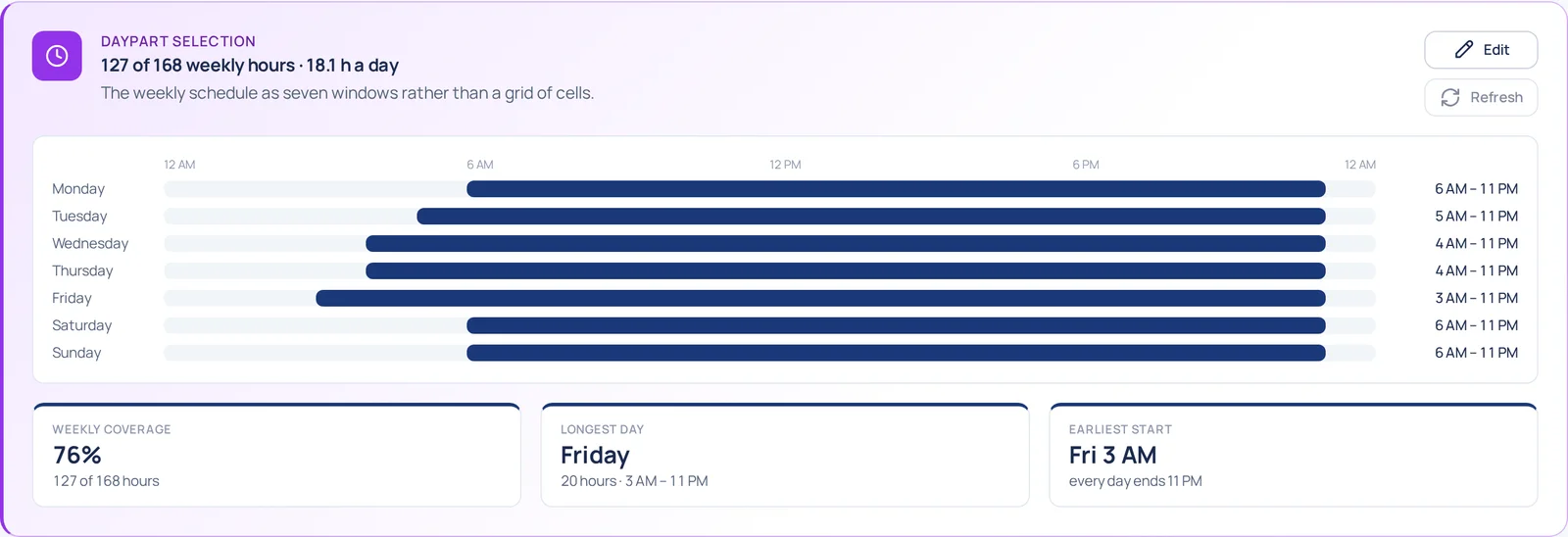
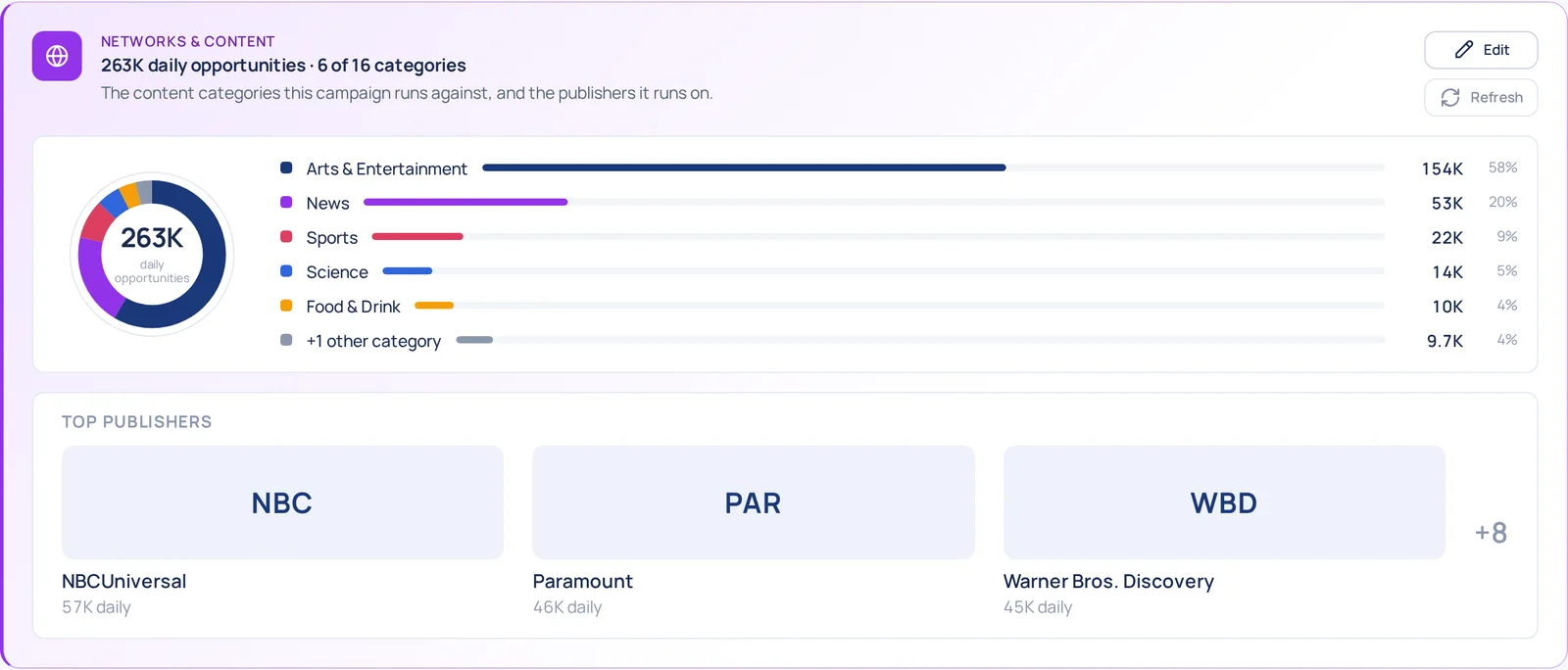
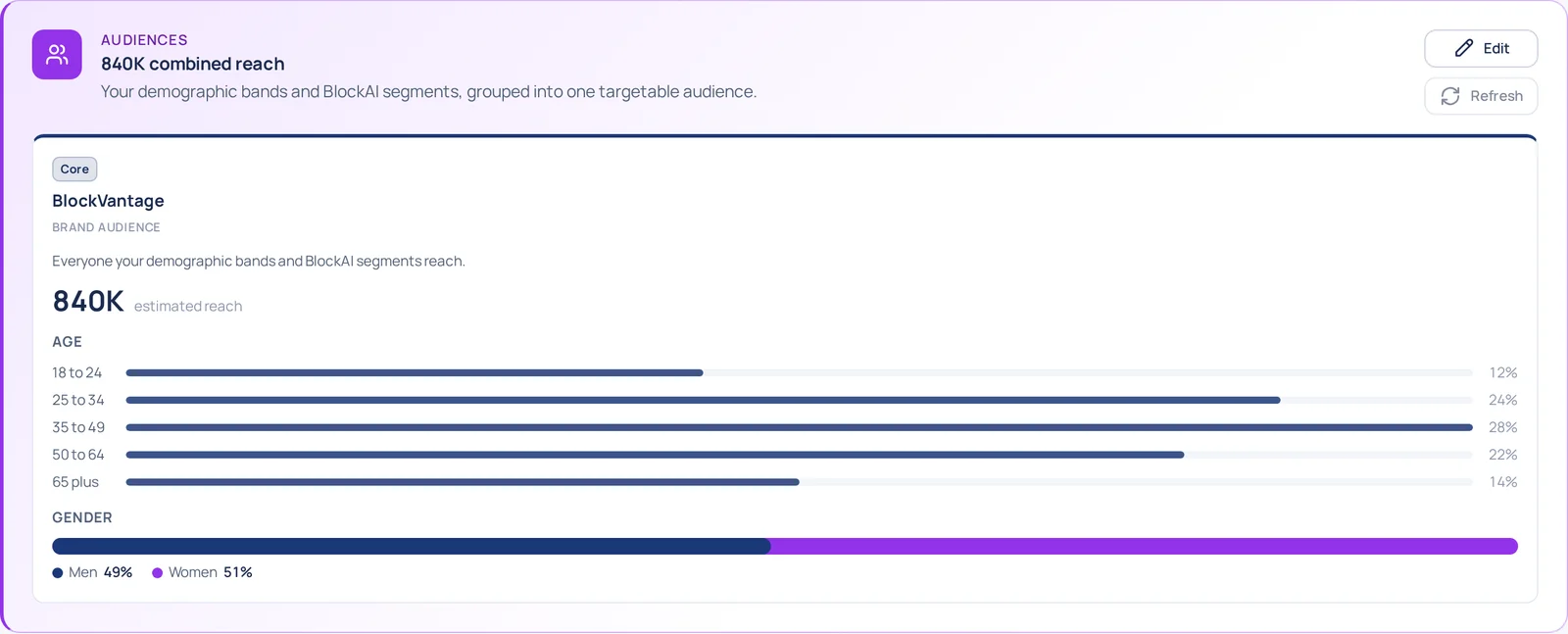
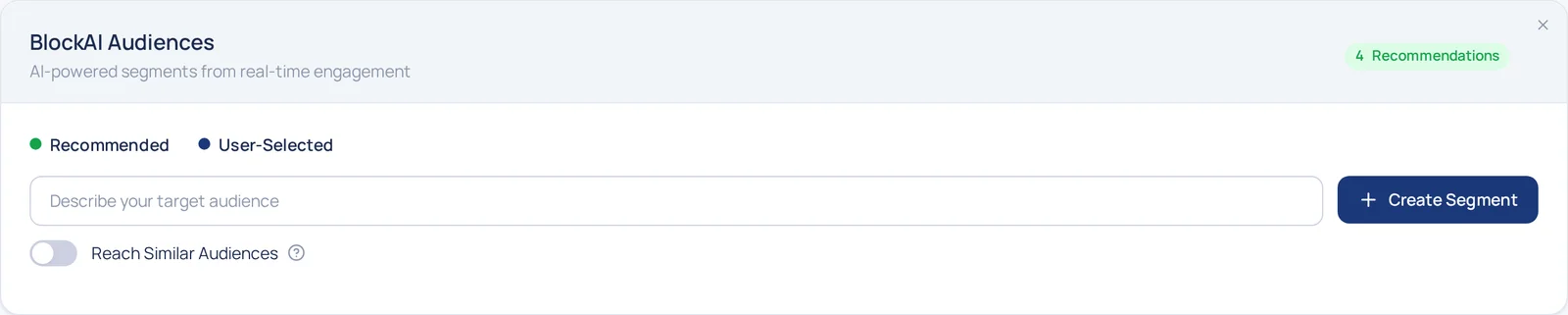
Each targeting surface is a card with a headline number, a plain-language sentence under its title, and a chart showing where the number comes from. Cards that carry AI picks say how many, in a green Recommendations chip, so the advertiser can always tell what the AI chose and what it left alone. Every card can be edited, and every edit moves the projections beside it. The AI goes first; the advertiser has the last word.
Device targeting
Geographic targeting
Daypart selection
Networks and content
Audiences, and the segment generator
Steps 2 and 3
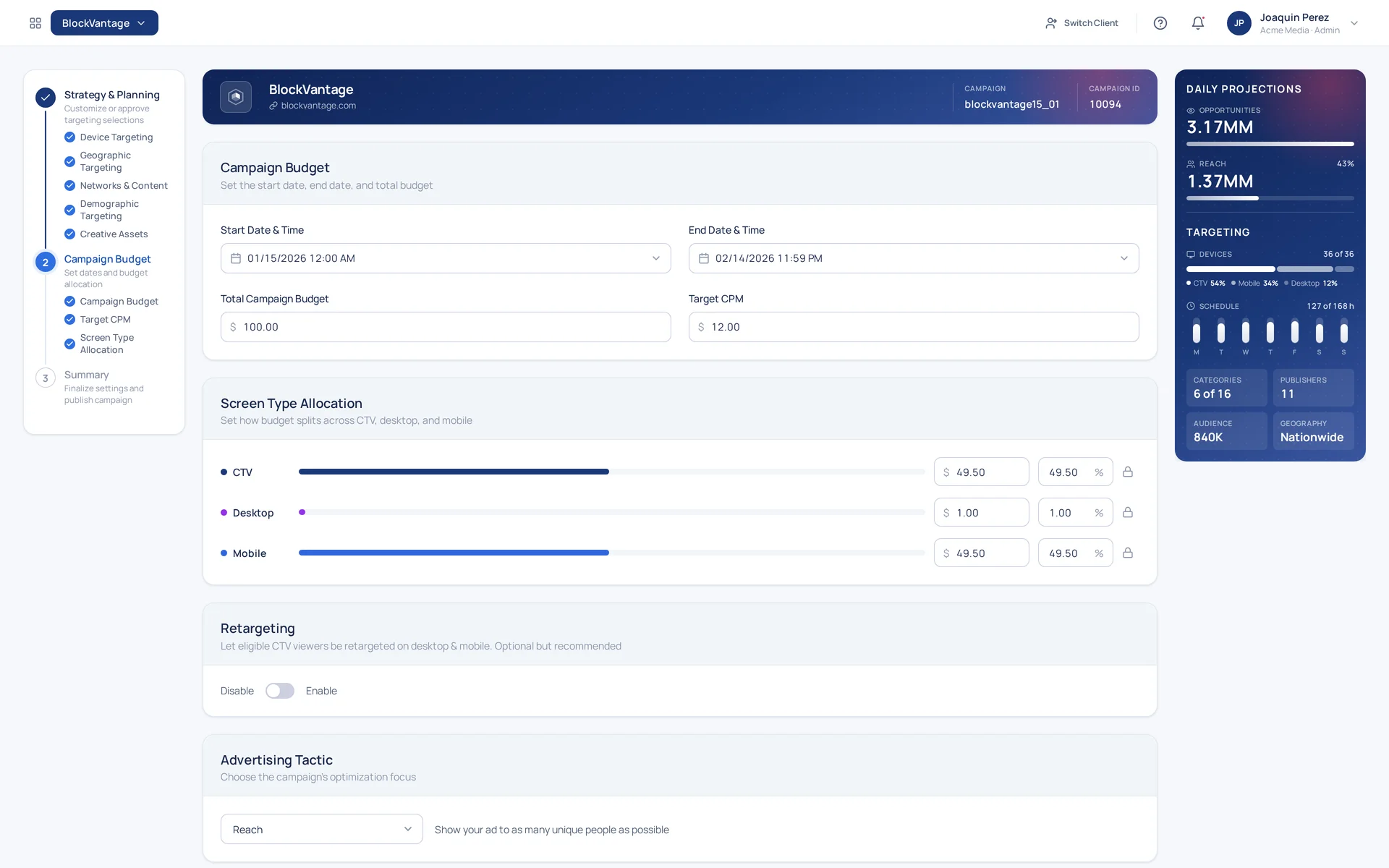
Then the money, then a read before publishing
After publishing
Once it is live
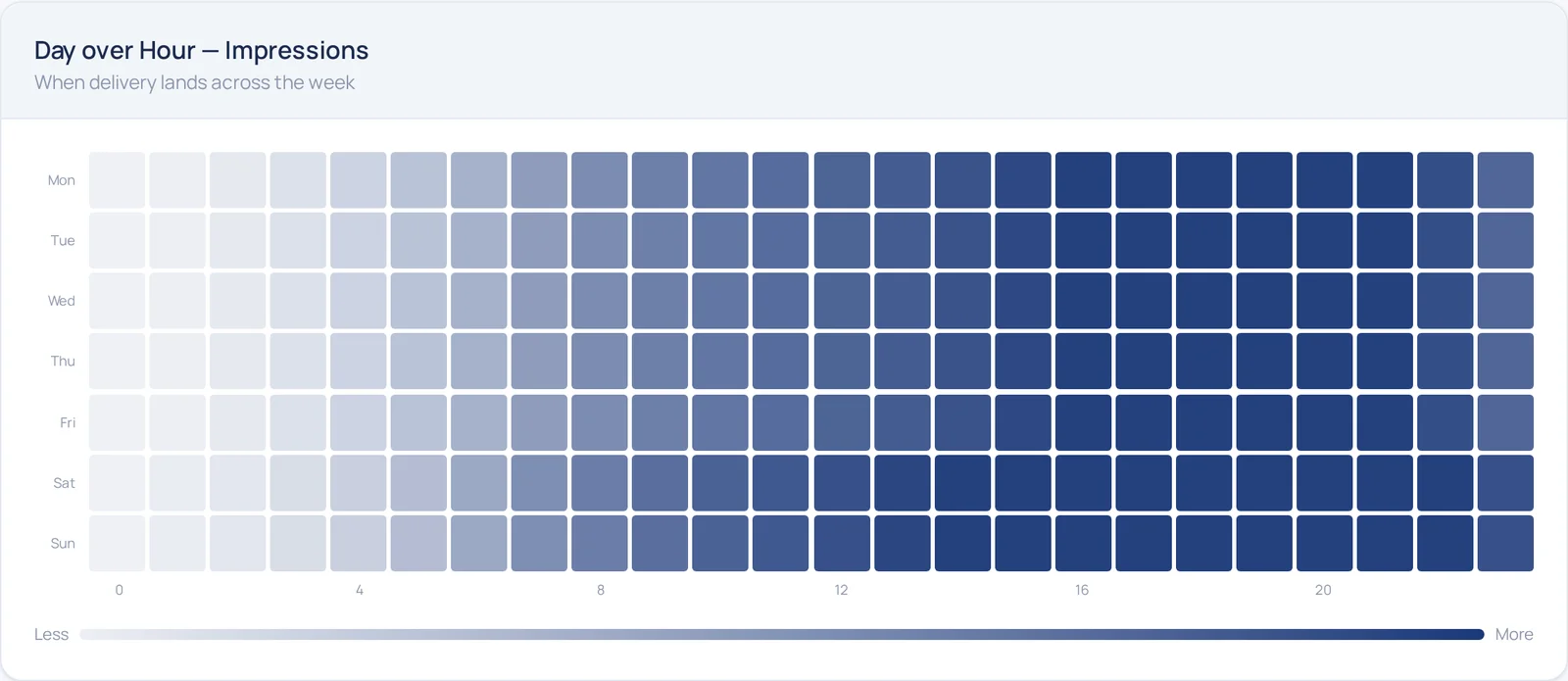
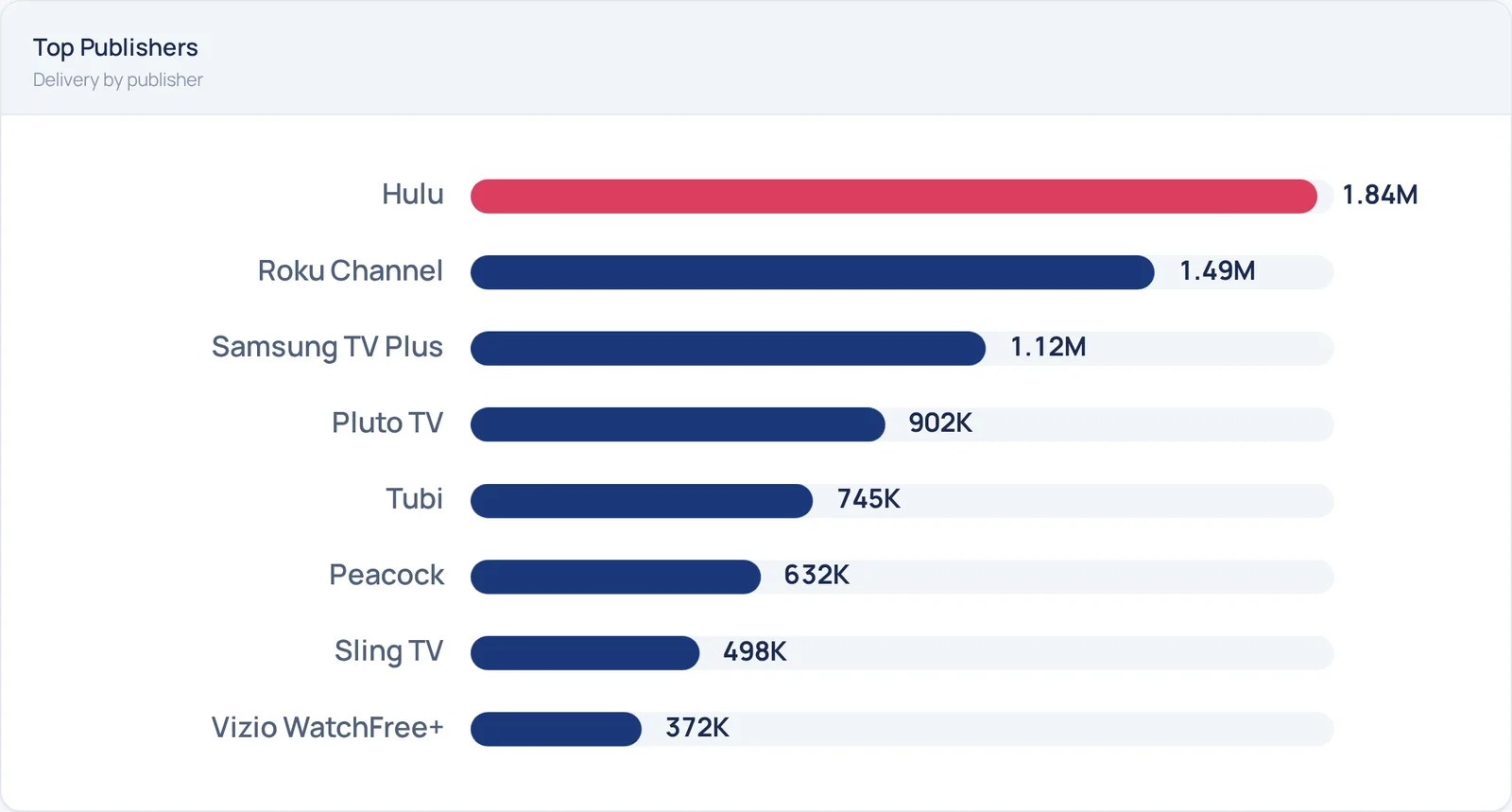
Publishing is where the trust gets tested. A first-time advertiser has just let an AI spend their budget on recommendations they approved, and the only thing that keeps that comfortable is seeing what happened.
Reports that come to you
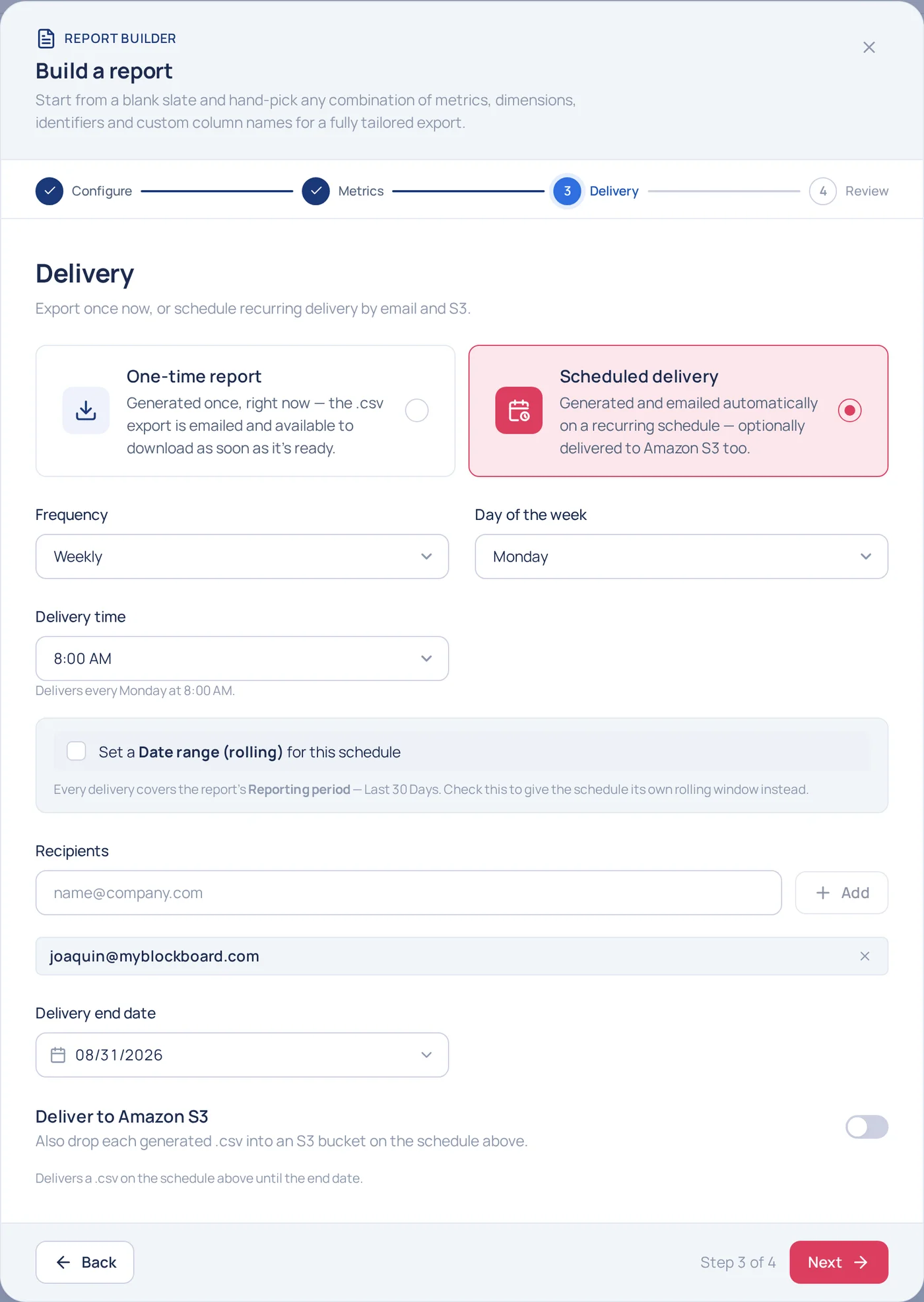
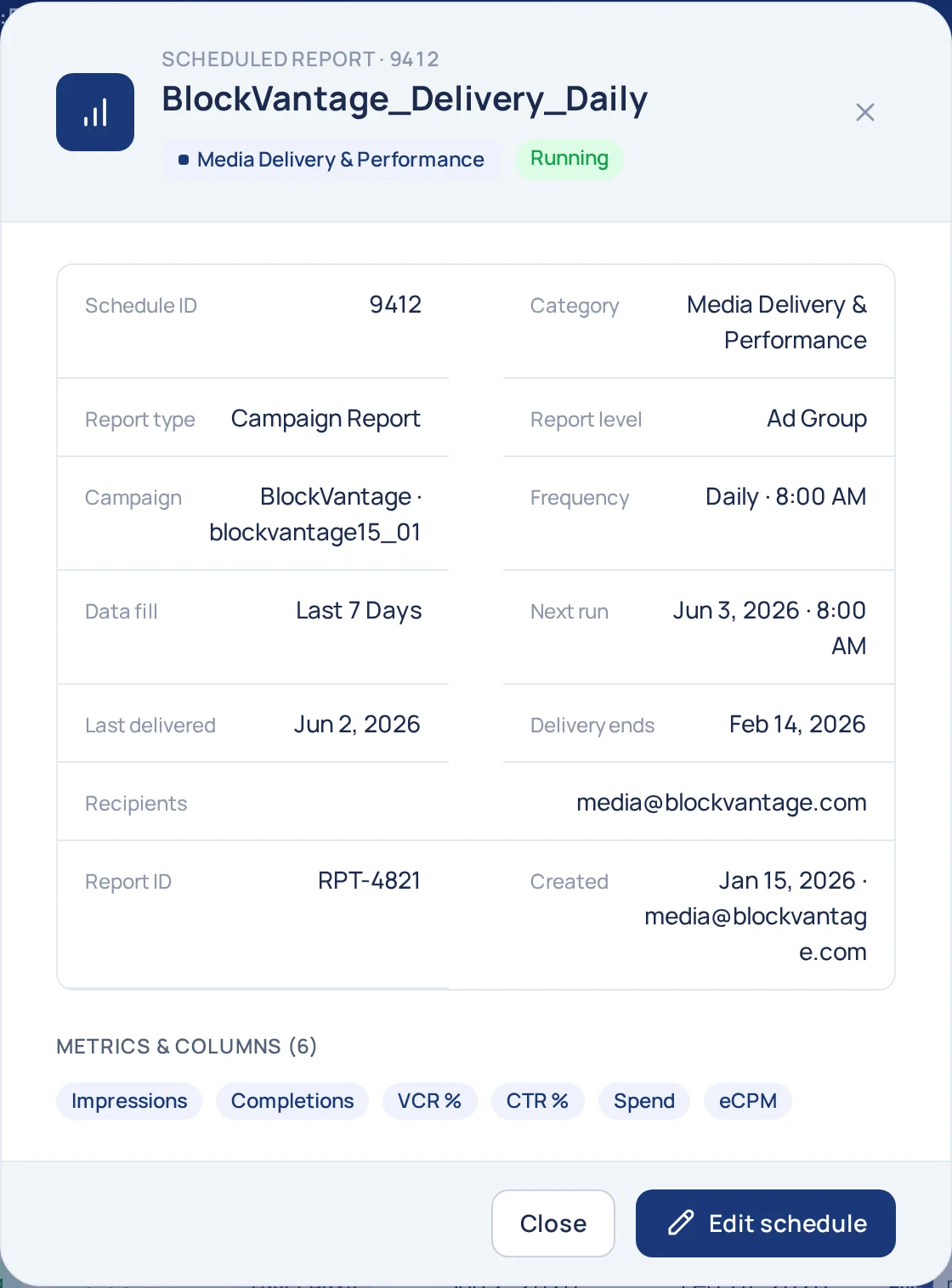
Reports carry the same numbers out of the product. The report builder walks through what to include, how often it goes out and to whom, and opening a scheduled report later shows the whole arrangement on one card: what it covers, how often it runs, when it goes out next, who receives it, and the metrics inside. The advertiser does not have to learn an analytics product to know the campaign is working.
Outcomes
Building trust.
The complexity of a streaming-TV campaign did not go away. It moved into the AI's recommendations, where each one is visible, counted and correctable. That is how the product earns a first-time advertiser's trust: it recommends, it shows why, and it stays open to change, so a first campaign is a review instead of a course in media buying.
An advertiser with a website and a budget gets a fully targeted campaign to review, with every AI pick shown, the reach projected beside it, and the results reported back once it runs. The numbers that say what that is worth:
75%
faster from URL to a published campaign
How much less time it takes an advertiser who arrives with a website and a budget to publish their first campaign.
82%
of AI recommendations kept as proposed
How much of the AI's targeting survives the review unedited, which is the measure of whether the recommendations are worth trusting.
0 → 1
first advertiser to onboard themselves
Blockboard had only ever sold enterprise: sales onboarded every advertiser and a media buyer built every campaign. This is the first advertiser to onboard themselves and publish alone, and the start of the move away from that model.